

Snellen Plastic Eye Chart
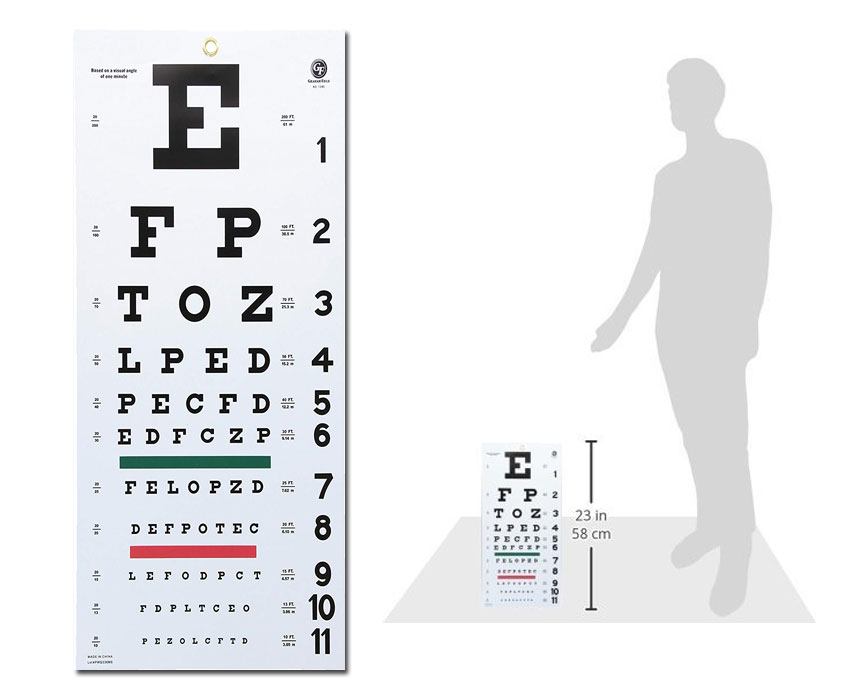
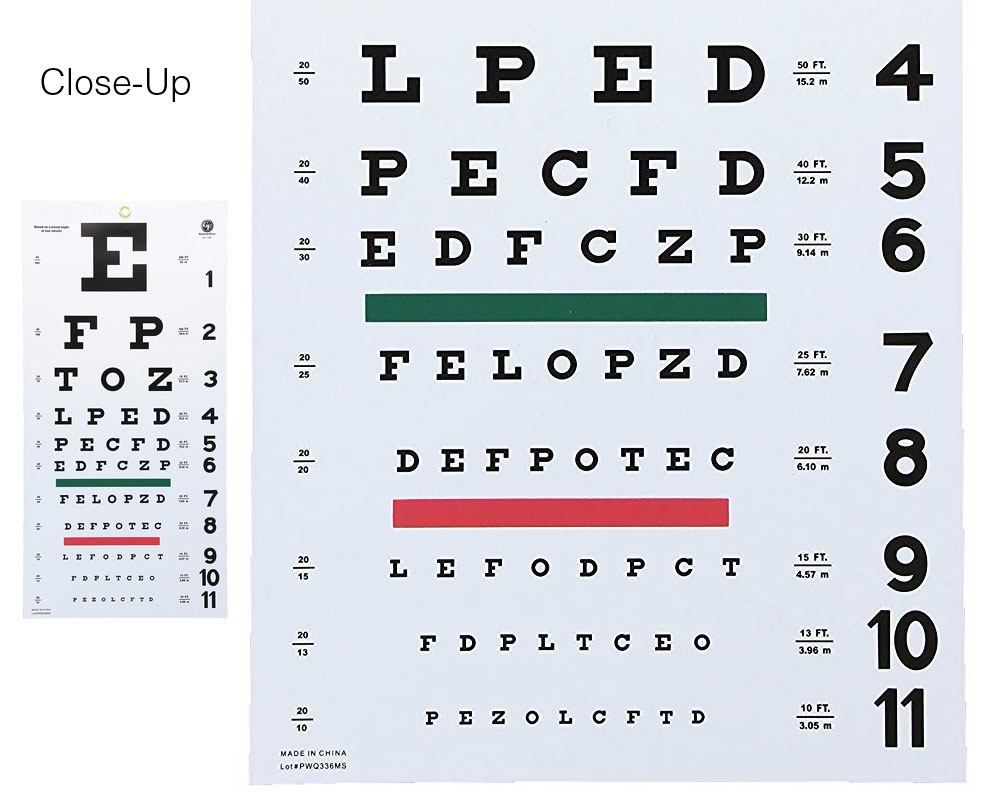
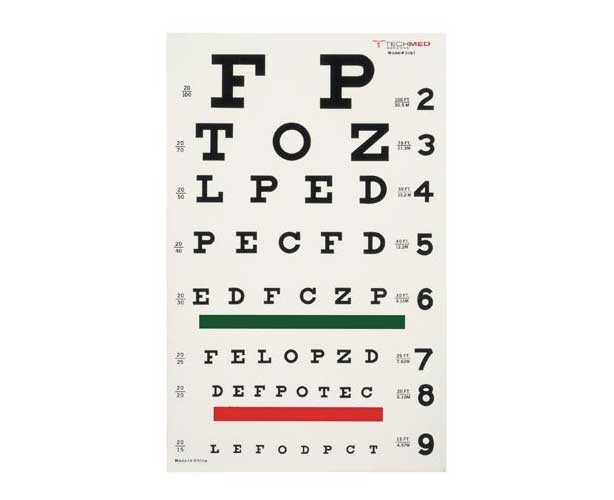
When it comes to vision health, the right tools are essential. The Snellen Plastic Eye Chart effectively tests visual acuity from a distance of twenty feet. It features a variety of design components that include:
- Non-reflective material
- Matte finish
- Green and red color bars
- Grommets for easy hanging
The Snellen Plastic Eye Chart is the standard plastic eye screening chart measuring 22" x 11”. It adheres to the long used design developed by Dutch ophthalmologist Herman Snellen in 1862. uIt is sed by ophthalmologists and vision scientists alike, as well as organizations such as the Department of Motor Vehicle (DMV). Also, the Snellen Plastic Eye Chartis excellent for home use to check eye strength on a daily basis.
Model No: 1240
For Your Information
Eye Checks: How Often?
The American Academy of Ophthalmology recommends the following timetable for eye exams. If you are at risk for a condition, your doctor will tell you if you need more frequent checks. If you develop eye redness that doesn't ease, sensitivity to light, changes in vision, or pain, see an eye doctor right away.
- Age 20–29—At least once
- Age 30–39—At least twice
- Age 40–64—Every two to four years
- Age 65 +—Every one to two years
For Your Information
The Aging Eyes
Like everything else in your body, eyes change as you get older, according to Timothy Wingert, O.D., associate director for public health at the American Optometric Association, Here, what to expect:
- Light Cravings. Your eyes may not adapt as well to darkness or dim lights. The Rx: Use brighter light when you read.
- Trouble Reading. As the lens in your eyes becomes less flexible, it's harder to read fine print or thread a needle. The Rx: Reading glasses and plenty of light.
- Glare. Another side effect of a changing lens: Light is scattered rather than focused in one spot on the retina. Oncoming headlights or bright sunlight may make it difficult to see. The Rx: Wear sunglasses during the day. At night, wear corrective lenses to bring things into sharper focus. And look away from oncoming headlights.
- Problems with Color Perception. If your lens becomes discolored, it's harder to distinguish among different colors. The Rx: Other than buying a neutral wardrobe, not much. Talk to your eye doctor; you could have a cataract.
- Floaters and spots. The vitreous fluid that holds the eye in place changes from a syrupy to watery consistency over time. The result: As light goes through the syrupy-watery mix, it causes the shadows we call floaters. The Rx: There's nothing you can do. But be vigilant. A sudden increase in their number along with the appearance of flashing lights or red sparks may signal a problem. See an eye doctor immediately.
Related Products
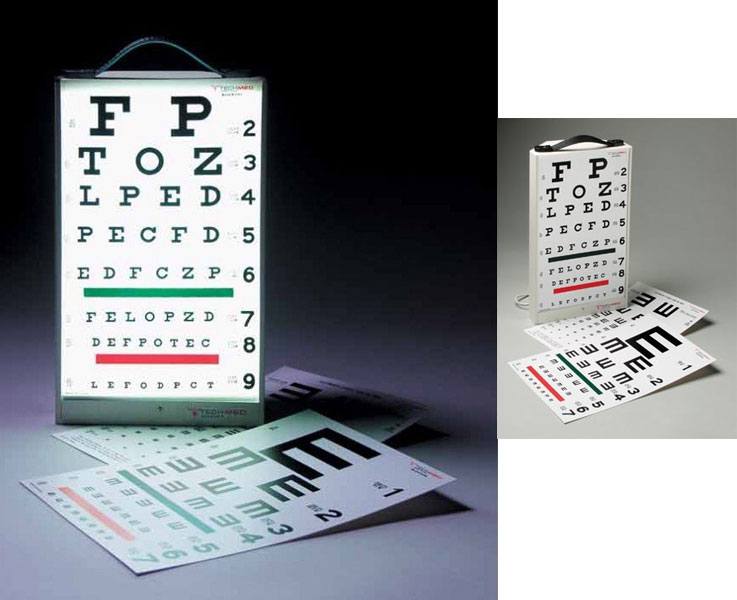
Tech-Med Illuminated Eye Test Cabinet
Pocket Size Plastic Eye Chart
Tech-Med Snellen Eye Chart